
That Frustrating Moment When Your Garage Door Won't Stay Closed
You press the button on your remote, watch your garage door start its descent, and then — halfway down or just inches from the floor — it suddenly reverses and goes right back up. You try again. Same thing. Maybe you try holding the wall button, and it still won't cooperate.
This is one of the most common garage door complaints we hear from homeowners across Rockford, and it's especially frustrating during our harsh Illinois winters when you need that garage sealed up tight. The good news is that in most cases, the cause is identifiable and fixable. Let's walk through the most likely reasons your garage door reverses before reaching the floor and what you can do about each one.
Understanding Your Garage Door's Safety System
Before we dive into causes, it helps to understand why your garage door is designed to reverse in the first place. Modern garage door openers manufactured after 1993 are required by federal law to include two safety mechanisms:
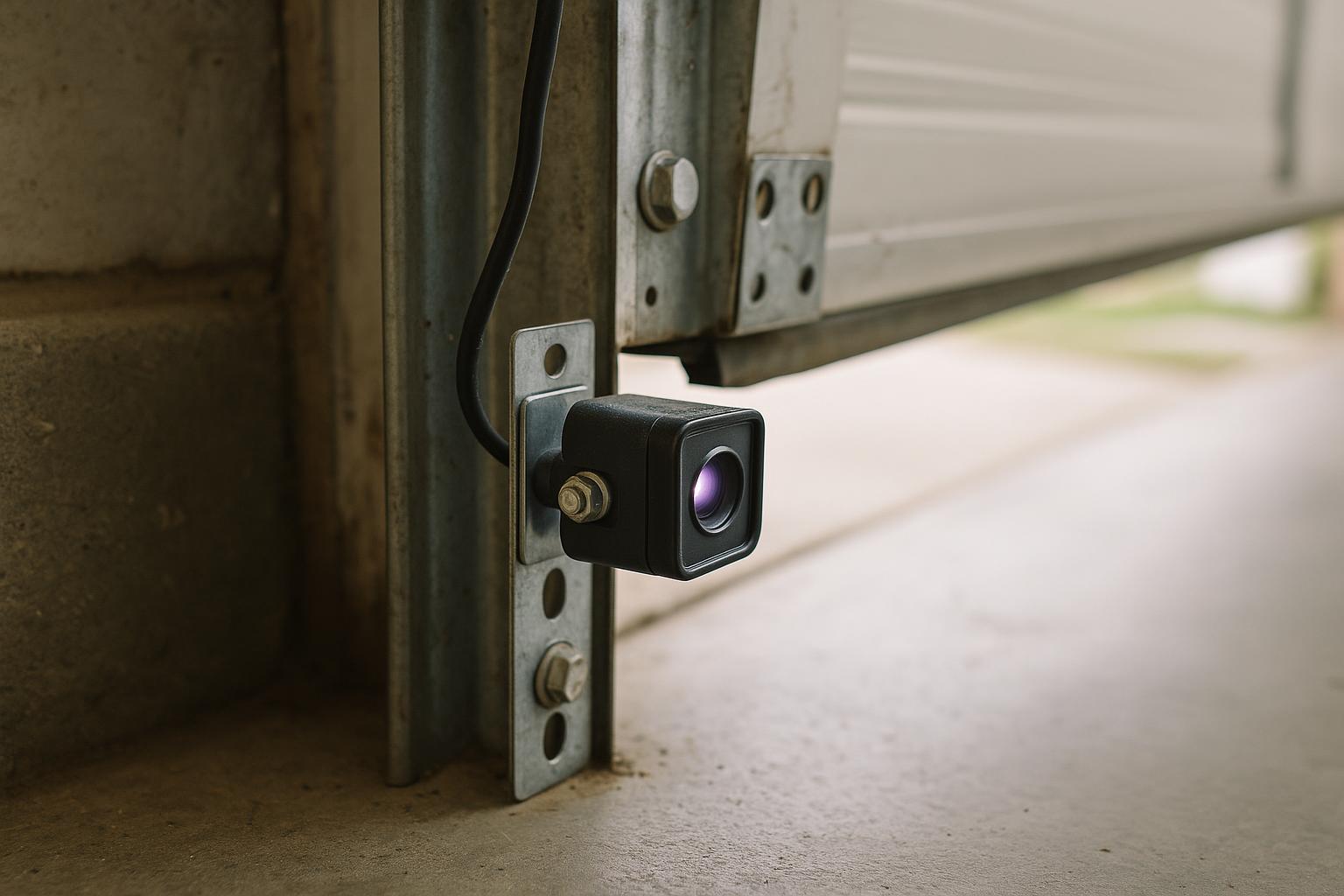
- Photo-eye sensors: These are the small devices mounted near the bottom of your garage door tracks on either side. They send an invisible beam across the opening, and if anything breaks that beam, the door reverses to prevent crushing a person, pet, or object.
- Auto-reverse mechanism: If the door encounters physical resistance while closing — like hitting an object on the ground — it's designed to stop and reverse direction.
Both of these systems are critical for safety, but when something goes wrong with either one, your door may reverse even when there's nothing in the way.
Common Cause #1: Misaligned Photo-Eye Sensors
This is the number one reason garage doors reverse unexpectedly, and fortunately, it's often the easiest to fix. The photo-eye sensors on either side of your garage door opening need to be precisely aligned so the infrared beam connects between them. If one sensor gets bumped — maybe by a bike, a lawnmower, or even a child — the beam breaks and the door thinks something is in the way.
What to check:
- Look at the LED lights on both sensors. Most models show a steady green light when aligned and a blinking light when misaligned.
- Gently adjust the sensor that appears to be off until both lights are steady.
- Clean the sensor lenses with a soft cloth. Dust, cobwebs, and dirt can block the beam, especially in garages that see a lot of use.
Here in Rockford, we also see condensation and frost on sensor lenses during cold months, which can cause intermittent reversing issues that seem to come and go.
Common Cause #2: Incorrect Close-Limit Settings
Your garage door opener has close-limit settings that tell the motor exactly how far the door should travel before it's considered fully closed. If these settings are off — even slightly — the opener may interpret the door hitting the ground as an obstruction and trigger the auto-reverse.
This issue is particularly common after a new opener installation or when someone has attempted a DIY adjustment. The close-limit switch needs to be calibrated so the door touches the floor with just the right amount of pressure. Too much travel, and the opener thinks the door is being blocked.
What to do:
Most openers have adjustment screws or digital settings for the close limit. Your owner's manual will have specific instructions. However, if you're not comfortable making these adjustments, it's best to call a professional. Incorrect settings can compromise the safety features of your system.
Common Cause #3: Damaged or Worn Tracks
Your garage door travels along metal tracks on both sides. If those tracks are bent, dented, or have accumulated debris, the door can bind or encounter resistance during its travel. When the opener senses that resistance, it interprets it as an obstruction and reverses.
Inspect your tracks visually from top to bottom. Look for:
- Visible bends or dents in the metal
- Gaps between the track and the wall mounting brackets
- Buildup of dirt, leaves, or small objects in the track channel
- Rust or corrosion, which is common in our Rockford climate with the seasonal moisture changes
Minor debris can be cleaned out carefully, but bent tracks should be repaired or replaced by a trained technician. Attempting to bend tracks back into shape without proper tools can make the problem worse.
Common Cause #4: Broken or Failing Springs
Your garage door springs do the heavy lifting — literally. They counterbalance the weight of the door so the opener motor doesn't have to work as hard. When a spring is weakening, broken, or improperly tensioned, the door becomes significantly heavier for the opener to manage.
In some cases, a failing spring causes the door to descend unevenly or too quickly, which triggers the auto-reverse. You might also notice the door feels unusually heavy if you try to lift it manually, or it slams down faster than normal.
Important safety warning: Garage door springs are under extreme tension and can cause serious injury if handled improperly. Spring replacement should always be performed by a qualified technician. This is not a DIY repair.
Common Cause #5: Wiring or Logic Board Issues
If you've checked the sensors, tracks, and springs and everything looks fine, the problem may be electrical. Frayed wiring between the sensors and the opener, corroded connections, or a failing logic board in the opener unit itself can all cause erratic reversing behavior.
Electrical issues are more common in older opener systems, particularly those that have been exposed to temperature extremes in uninsulated Rockford garages for many years. If your opener is more than 15 years old and experiencing multiple issues, replacement may be more cost-effective than repeated repairs.
When to Call a Professional
Some of these fixes — like cleaning sensor lenses or removing debris from tracks — are safe for most homeowners to handle. But several of the causes we've discussed involve components that are dangerous to work with or require specialized knowledge to diagnose properly.
You should call a garage door professional if:
- The door continues to reverse after you've cleaned and realigned the sensors
- You suspect a spring issue — never attempt spring repair yourself
- The tracks are visibly bent or damaged
- You're unsure how to adjust the close-limit settings on your opener
- The problem is intermittent and you can't identify the cause
At Rockford Garage Door Service, we diagnose reversing issues every week for homeowners in Rockford, Loves Park, Machesney Park, and the surrounding communities. In most cases, we can identify and fix the problem in a single visit so you're not left with an open garage overnight.
Don't Ignore a Reversing Garage Door
It might be tempting to just leave the door open or try to force it closed, but neither option is safe or practical. An open garage is an invitation for theft, pests, and weather damage. And disabling the safety features to force the door closed puts your family at serious risk.
If your garage door is reversing and you can't solve it with a quick sensor cleaning, give us a call. We'll show up on time, figure out what's going on, and get your door working properly — the first time.